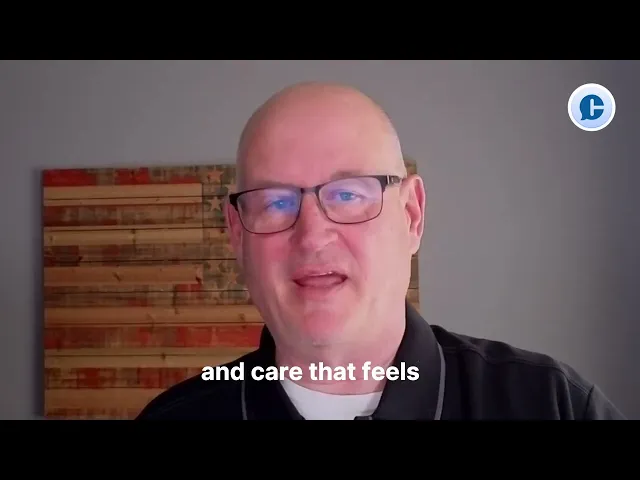
Healthcare is entering a new era in which virtual care is no longer viewed as a convenience feature. It is becoming a foundational layer of healthcare delivery, and the expected experience for every healthcare consumer. Over the next 3 years, telehealth will evolve well beyond simple video visits and episodic care toward integrated virtual healthcare ecosystems that combine clinical support, AI-driven engagement, care navigation, and longitudinal patient management.
The economics of waiting are no longer sustainable
For health plans, especially those serving the rapidly expanding Medicare Advantage population, the economics now demand a different model. Closing gaps in care, improving medication adherence, lifting Star Ratings, and managing chronic conditions cannot be accomplished through annual wellness visits alone. The cost of waiting until a member's condition worsens will have a continued ripple in the healthcare economy.
Members feel this too. Today's Medicare Advantage consumer is more tech-savvy than ever, and expects faster access, personalized communication, digital convenience, and support that feels continuous rather than transactional. They do not want to engage with their health plan once a year. They expect trusted guidance throughout the year, delivered with the responsiveness they already experience from the rest of the technology in their lives.
Extending operations through virtual care teams
This is where health plan operations must evolve. The next generation of virtual care will be built around extended clinical teams that operate as scalable engagement and care-support extensions of the plan itself. These teams can address preventive screenings, chronic condition support, behavioral health outreach, medication adherence, and member education at a unit economic profile that an in-house buildout simply cannot grow fast enough. Done well, they do not add complexity to plan operations; they absorb it, freeing internal teams to focus on higher-acuity, higher-judgment work. The result is a leaner cost structure with a broader clinical footprint.
Technology as an extension, not replacement
Importantly, this evolution we are seeing is not about replacing clinicians. It is about extending their reach. The old view of allowing a physician to simply practice “at the top of their license”. However, we are in a new era in which people + tech = scale is the underlying theme taught in leading academic medical centers in the US. This approach is a way that is proactive, data-informed, and deeply patient-centered. The modern care-extension model layers interoperable data, AI-enabled workflows, and real-time engagement on top of human clinical judgment, so members feel seen, and plans see measurable lift in outcomes and quality metrics. At CareTalk Health, this is exactly the model we are building toward: virtual care that feels human, connected, and accessible in-the- moment members need it most.
Defining the next decade
The organizations that build these ecosystems via combining technology, data, and human clinical engagement around the member experience will be the ones that define the next decade of healthcare delivery. As tens of millions more Americans enter Medicare Advantage in the years ahead, the industry's obligation only grows.
The question I keep returning to is a simple one: how do we ensure no member is left behind?
For better health and better technology to get us there,
Troy Belden - Chief Technology Officer - CareTalk Health